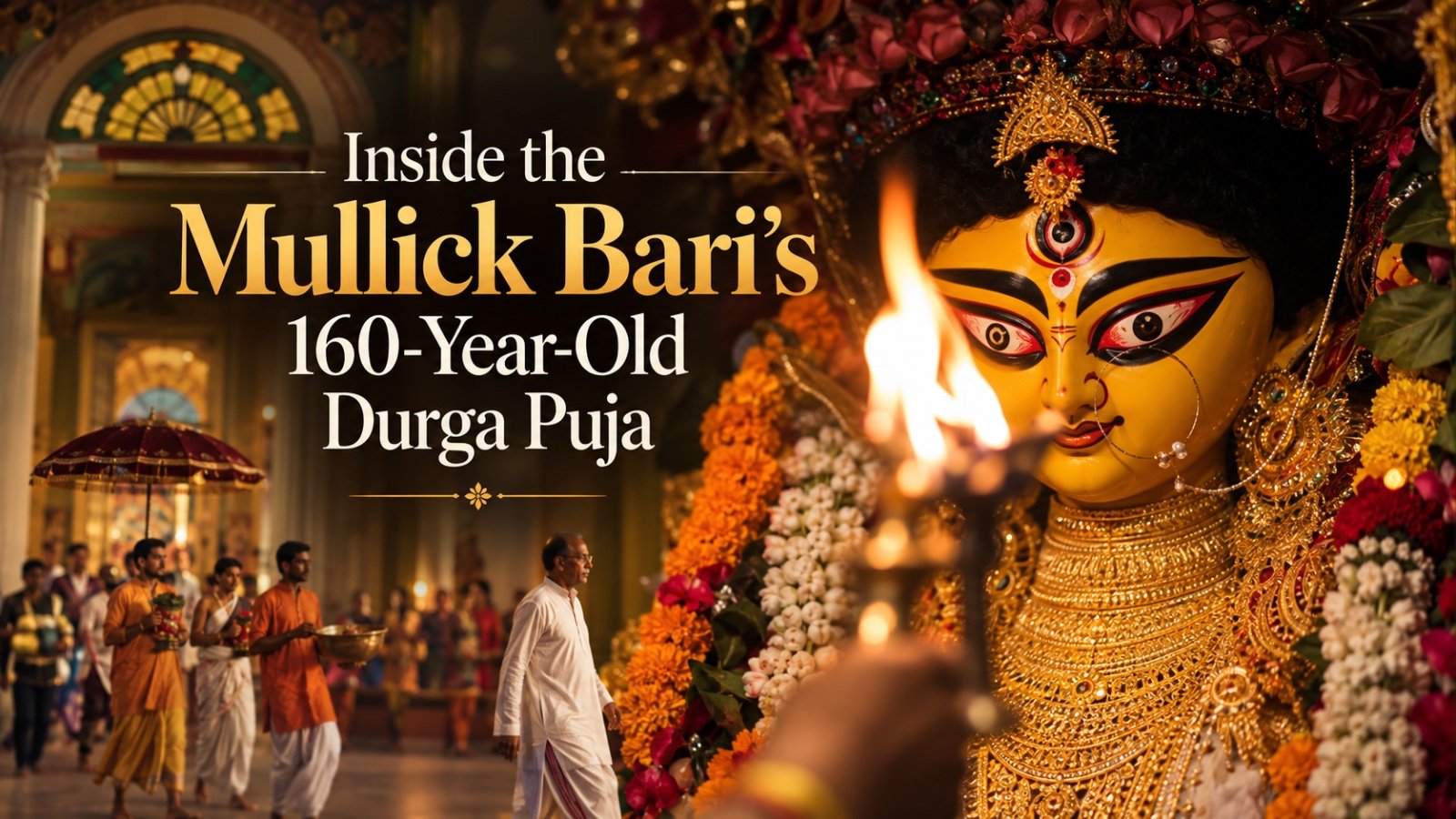
Sikdar Para Mullick Bari: A Durga Puja That Has Outlived Five Generations
Most bonedi bari Durga Pujas begin with a single founder building a household deity and a tradition around it. The Sikdar Para Mullick Bari puja began differently – as an inheritance. In 1866, Shib Chandra Mullick received the right to perform this Durga Puja through his mother’s family, becoming its first sole Shebait. It was a puja that entered the family sideways, through a maternal connection, rather than being built from scratch – and that origin story has shaped how seriously the family has guarded its continuity ever since.
A Lineage That Refused to Break
What makes this puja’s history remarkable is how many times it could have quietly ended – and didn’t.
When Shib Chandra Mullick passed away, his son Rishikesh Mullick took over the responsibility. But Rishikesh died young, in 1873, leaving the puja without an obvious successor. Rather than let it lapse, his widow, Puro Sundari Dasi, stepped in and performed the puja herself for decades – even after outliving her own daughter. It was only after Puro Sundari Dasi’s death in 1932 that the puja passed, by reversionary right, to the family of Banshidhar Mullick, whose descendants have carried it forward ever since.
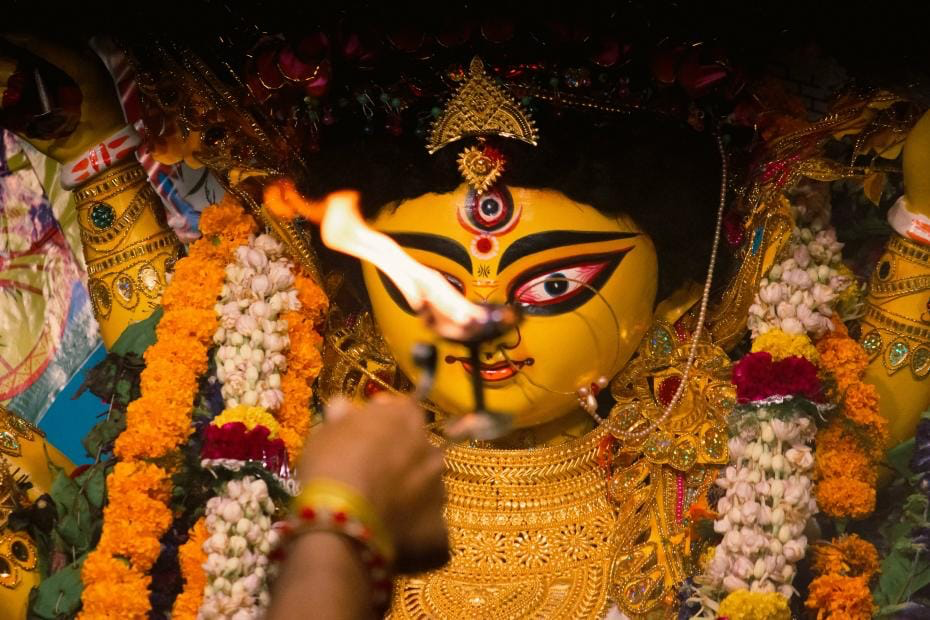
Four generations, one uninterrupted thread – the Sikdar Para Mullick Bari Durga Puja is as much a story of family resilience as it is of religious devotion.
The Rituals: A Festival Built on Sequence
Agomoni: The Puja Begins Before the Idol Arrives
The family’s Durga Puja doesn’t start with Maa Durga’s idol at all – it starts the day after Mahalaya, when the household deity, Narayan Shila Jew, is brought from the Thakurbari into the Durga Dalan for Agomoni puja. Chadnipath, puja, and arti continue daily until Sasthi evening, when attention formally shifts to the goddess’s idol through the Bodhon ritual.
Saptami: Kolabou Snan at the Ganga
Early on Saptami morning, the family travels together to the Ganga for Kolabou Snan. After the rituals at the ghat, the household performs Maha Snan back home – a bathing ritual using water from nine rivers along with curd, milk, honey, sugar, and ghee. The Kolabou is then placed beside Maa Durga’s idol before Saptami puja, arti, and Pushpanjali begin.
Ashtami: Fasting, 108 Lotuses, and a Hidden Deity
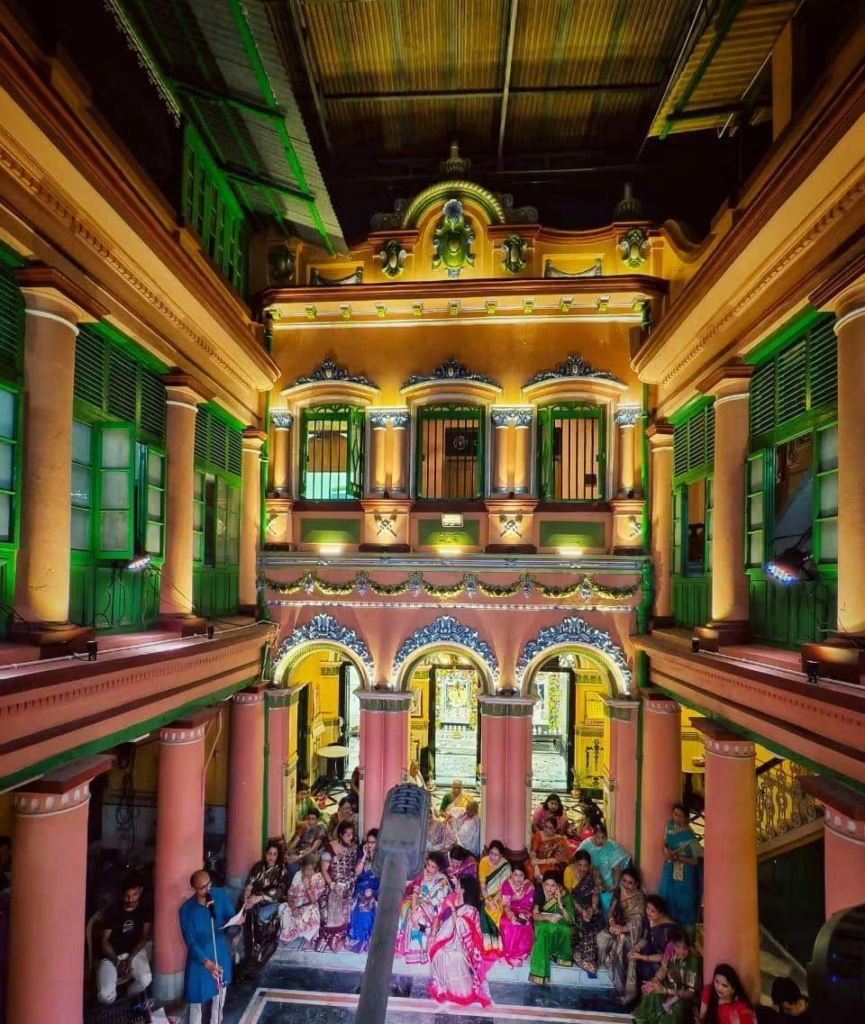
Maha Ashtami is treated as the most sacred day of the festival. The household observes a fast that lasts until Sandhi Puja concludes, and the morning worship includes an offering of 108 lotus flowers to Maa Durga. Following the main puja, the married women of the house perform Dhuno Porano.
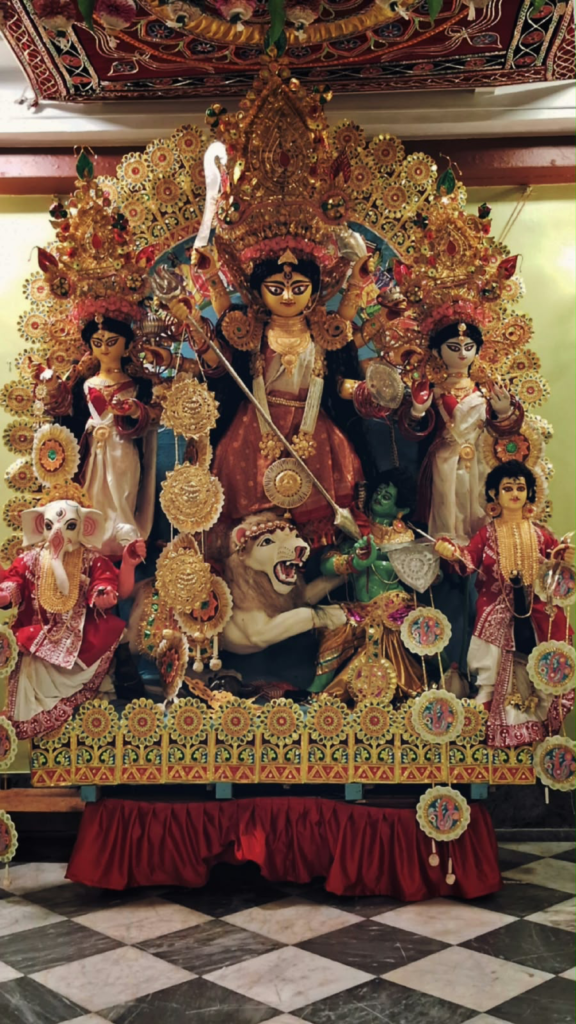
One tradition sets this household apart: a dedicated Ashtami worship of Mahamaya Devi – Maa Durga seated on Shiva’s lap – conducted through a ghot and a hand-painted image preserved at the family’s Thakurbari. It’s a form of worship rarely documented outside individual family homes.
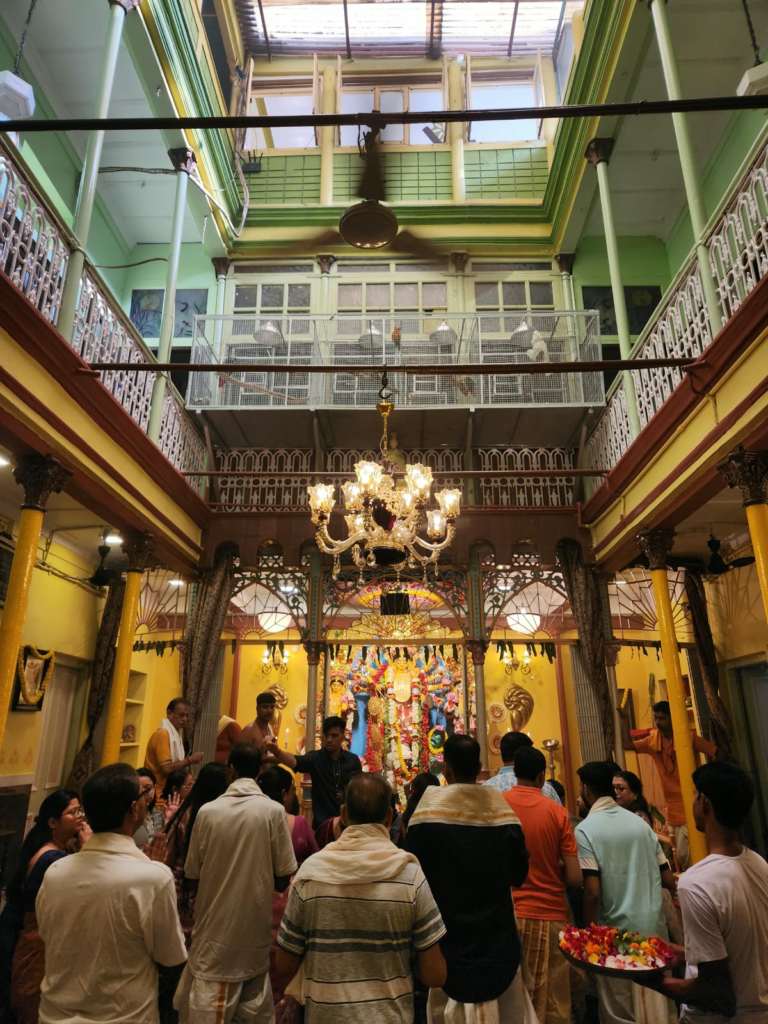
Sandhi Puja: When the Doors Close and Maa Durga Arrives
At the exact junction of Ashtami and Nabami tithi, the family performs Sandhi Puja – 48 minutes split evenly between the two days, worshipping the goddess in her Maa Chamundi form. Every room in the house is lit, dhuno smoke fills the dalan, and the main entrances are closed. According to family belief, this is the moment Maa Durga herself arrives to witness the puja and dwell among them. Sandhi Puja closes with another round of Dhuno Porano by the married women.
Nabami and the End of the Yagya
Nabami morning brings puja, arti, and Pushpanjali, and the hom or yagya that began on Saptami morning finally concludes with Dakshinanto. As the last full day of core puja before Vijaya Dashami, it’s also when the extended family – including those who’ve traveled back for the festival – gathers simply to be together.
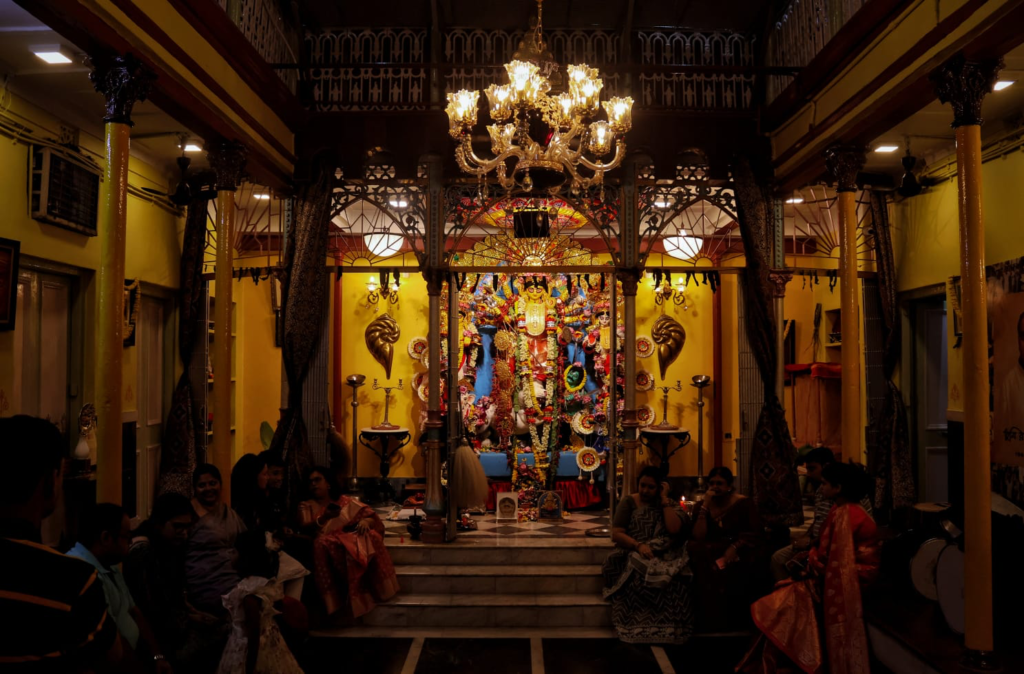
Vijaya Dashami: Boron, Sindoor Khela, and Visarjan
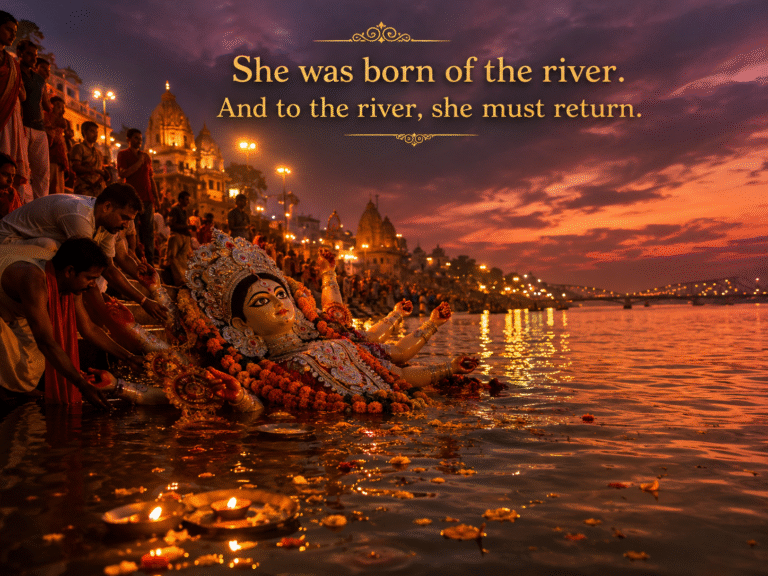
On the final day, after morning puja and arti, the thread tied around the idol since Saptami is symbolically torn, marking Maa Durga’s departure for Kailash. The married women of the family gather in the dalan for Boron, dressed in lal paar shada sarees, before joining together for Sindoor Khela. In the evening, the family travels to Prosono Kumar Ghat for visarjan. On returning home, shanti jol is sprinkled as a blessing, elders are sought out for ashirbad, and the family sits down together for a dinner that includes fish – the first non-vegetarian meal after days of a strictly vegetarian puja.
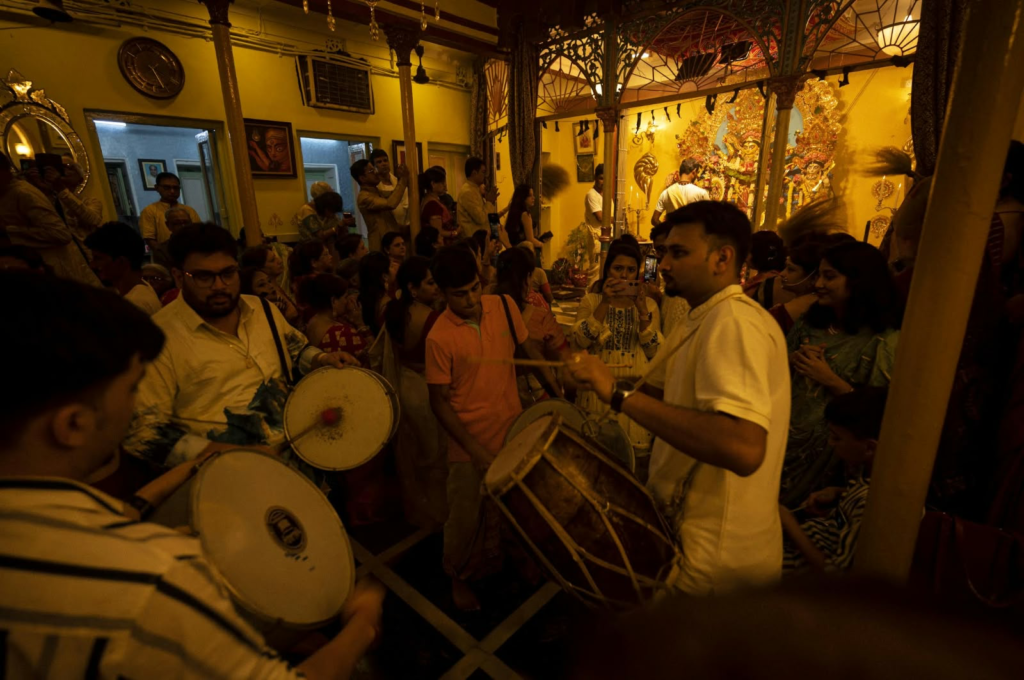
What the Goddess Is Offered
The household follows a distinct set of food offerings: luchi with chini, torkari, fruits, and sweets are offered to Maa Durga. Cooked rice or dal is deliberately never offered – instead, the family presents noibiddi, made of uncooked rice and sweets.
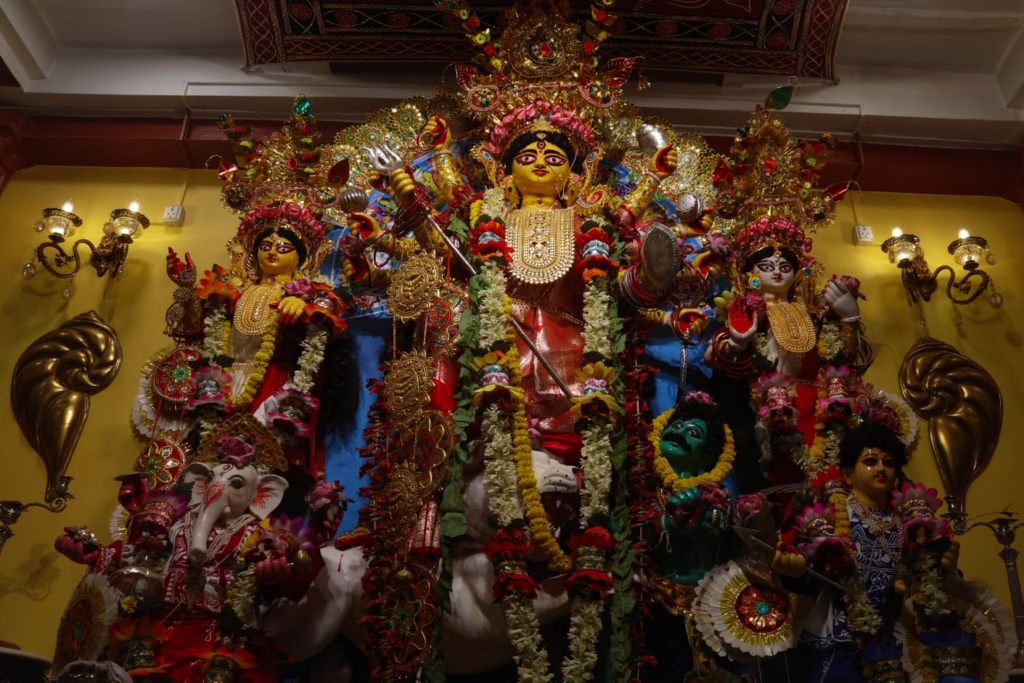
A Family That Still Comes Home
Perhaps the most telling detail in the Mullick Bari’s story isn’t a ritual at all – it’s who shows up. Members of the family living abroad make a point of returning each year, ensuring the household still gathers in full for lunch and dinner throughout the festival. As one generation hands the responsibility to the next, that instinct – to come back, every year, no matter the distance – may be the truest ritual of all.