Kali Puja 2026 Date and Time: Shyama Puja Nishita Muhurat and Puja Vidhi
What is Kali Puja, also known as Shyama Puja?
Kali Puja (কালীপূজা), also called Shyama Puja, Mahanisha Puja and Dipanwita Kali Puja, is the midnight worship of Goddess Kali on the new moon night of the Hindu month of Kartik. West Bengal, Assam, Odisha and Tripura celebrate it with great energy. In Kolkata, many people call it the biggest festival after Durga Puja.
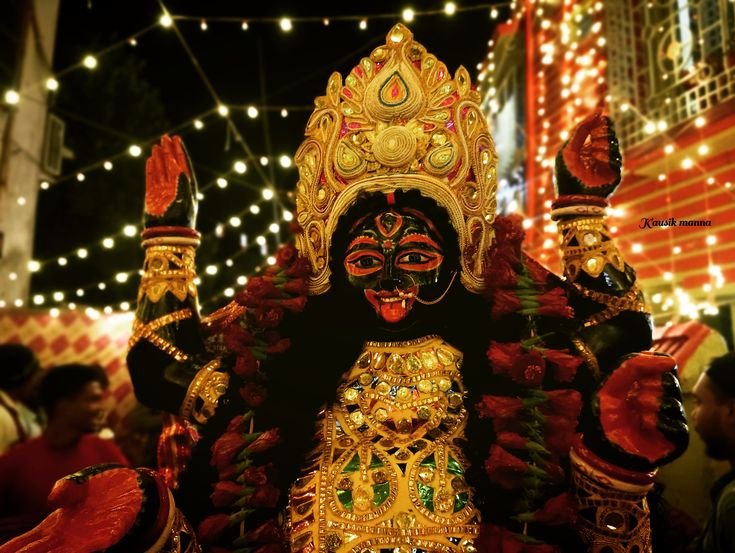
Devotees worship Kali as the fierce and protective form of the Divine Mother, most often as Dakshina Kali. The worship stands for the victory of good over evil and of knowledge over ignorance, which is why homes and pandals glow with lamps on this dark night.
The history of Kali Puja goes back several centuries. According to legend, the Tantra scholar Krishnananda Agamavagisha of Nabadwip first modelled Kali’s idol after a dream, around 1575 CE. Raja Krishnachandra of Nadia later helped popularise the festival across Bengal.
When is Kali Puja 2026?
Kali Puja 2026 is on Sunday, 8 November 2026. The main worship happens at midnight, so the puja runs into the early hours of Monday, 9 November. The Shyama Puja date matches Diwali 2026, which also falls on Sunday, 8 November.
Kali Puja and Diwali usually share a date, but not always. Kali Puja follows the day when Amavasya (the new moon tithi) is active at midnight. Lakshmi Puja follows the day when Amavasya is active during Pradosh, the evening period after sunset. In 2026, both conditions land on 8 November.
Bengali households worship Lakshmi earlier in the season, on Kojagari Lakshmi Puja at Sharad Purnima, which fell on 25 October this year. That is why Goddess Kali takes the spotlight on the Diwali night in Bengal.
Kali Puja fell on 20 October in 2025. Some older pages still show an October date, so always check the year before you plan.
Amavasya tithi timings for Kali Puja 2026
Kartik Amavasya 2026 begins at about 11:27 AM on Sunday, 8 November and ends at about 12:31 PM on Monday, 9 November (IST).
- Amavasya tithi begins: about 11:27 AM, Sunday, 8 November 2026
- Amavasya tithi ends: about 12:31 PM, Monday, 9 November 2026
The tithi covers the whole night of 8 November, so the midnight Kali Puja sits comfortably inside it. Almanacs can differ by a minute or two, so confirm the exact moment with your family priest or local puja committee.
Kali Puja 2026 Nishita muhurat by city
In Kolkata, the Nishita Kaal puja muhurat on 8 November 2026 runs from 10:55 PM to 11:46 PM. Nishita Kaal is the midnight window of the night, and it is worked out from local sunset and sunrise. Eastern cities such as Kolkata therefore get an earlier window than cities in the north and west.
| City | Nishita muhurat (IST) |
|---|---|
| Kolkata | 10:55 PM to 11:46 PM, 8 November |
| New Delhi | 11:39 PM to 12:31 AM, 8 to 9 November |
| Ujjain | 11:44 PM to 12:36 AM, 8 to 9 November |
The Hindu day runs from sunrise to sunrise, so the hours after midnight on 9 November still belong to the Kali Puja day of 8 November. Timings can shift slightly with location and calculation method, so check your own city’s panjika or ask your puja committee before you plan the night.
Bhoot Chaturdashi 2026 and the Kali Puja calendar
Bhoot Chaturdashi 2026 falls on Saturday, 7 November, the day before Kali Puja. On this evening, Bengali families light fourteen lamps around the house and eat fourteen kinds of leafy greens, called choddo shaak. They do this to honour their ancestors and keep the household safe.
| Date | What happens |
|---|---|
| Saturday, 7 November 2026 | Bhoot Chaturdashi: fourteen lamps and choddo shaak |
| Sunday, 8 November 2026 | Kali Puja, Shyama Puja and Diwali; Amavasya begins at about 11:27 AM; Nishita puja at night |
| Monday, 9 November 2026 | Nishita puja carries into the early hours; Amavasya ends at about 12:31 PM |
Kali Puja vidhi: how the midnight puja is performed
The main Kali Puja is the Nishita puja, performed during the midnight window with red hibiscus flowers, lamps, fruits, sweets and incense. Families follow different traditions, so your family priest or puja committee has the final word. A common order looks like this:
- Clean the puja space and place the clay idol or a framed image of Goddess Kali.
- Light earthen lamps at dusk, as you would for Diwali.
- Worship Ganesha first, then take the sankalpa (your statement of intent) if your family follows it.
- Decorate the idol with red hibiscus, her favourite flower, and set out fruits, sweets, incense and the bhog.
- During Nishita Kaal, perform the main puja with mantras, then offer pushpanjali and aarti. Devotees often chant the Kali beej mantra “Om Krim Kalikayai Namah”.
- Distribute the prasad among family and visitors.
Kali Puja is a night-long affair in Bengal. Homes, local clubs and large community pandals all keep their lamps burning till late.
Where to see Kali Puja 2026: temples and pandals in Kolkata and beyond
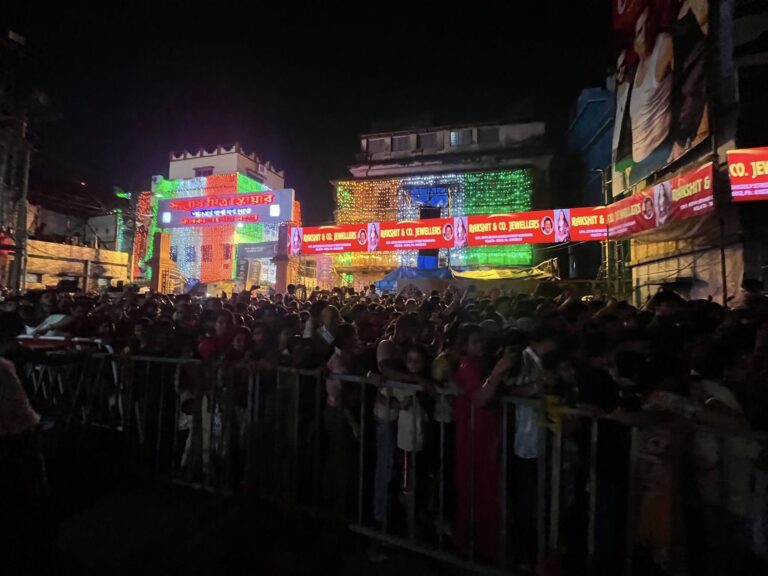
Kolkata and the towns around it host the biggest Kali Puja celebrations in India. The temples draw huge crowds through the night, and the pandals compete on themes and lighting. Plan your travel early, because roads fill up well before Nishita Kaal.
- Kalighat Kali Temple, Kolkata: the famous shrine where devotees worship Goddess Kali as Dakshina Kali.
- Dakshineswar Kali Temple, Kolkata: the riverside temple where Sri Ramakrishna performed rites.
- Firingi Kalibari, Bowbazar: one of the oldest Kali temples in Kolkata, where she is worshipped as Maa Siddheshwari.
- Tarapith, Birbhum: the Shakta pilgrimage town that draws devotees from across Bengal.
- Barasat, Naihati and Madhyamgram: pandal hubs near Kolkata. Barasat’s Kali Puja is said to be the largest in West Bengal.
- Girish Park and Shibpur Bijoyee Sangha: well-known Kali Puja pandals in and around central Kolkata.
Plan your Kali Puja 2026
Mark Sunday, 8 November 2026 for Kali Puja, Shyama Puja and Diwali night in Bengal. Light your fourteen lamps on Bhoot Chaturdashi, Saturday, 7 November. Then keep the Nishita Kaal for the main worship: in Kolkata it runs from 10:55 PM to 11:46 PM. Whether you worship Dakshina Kali at home or join the crowds at Kalighat, Dakshineswar or a neighbourhood pandal, confirm the exact timing with your family priest or puja committee.