Top Durga Pujas in Howrah: A Complete Guide to the City’s Best Pandals
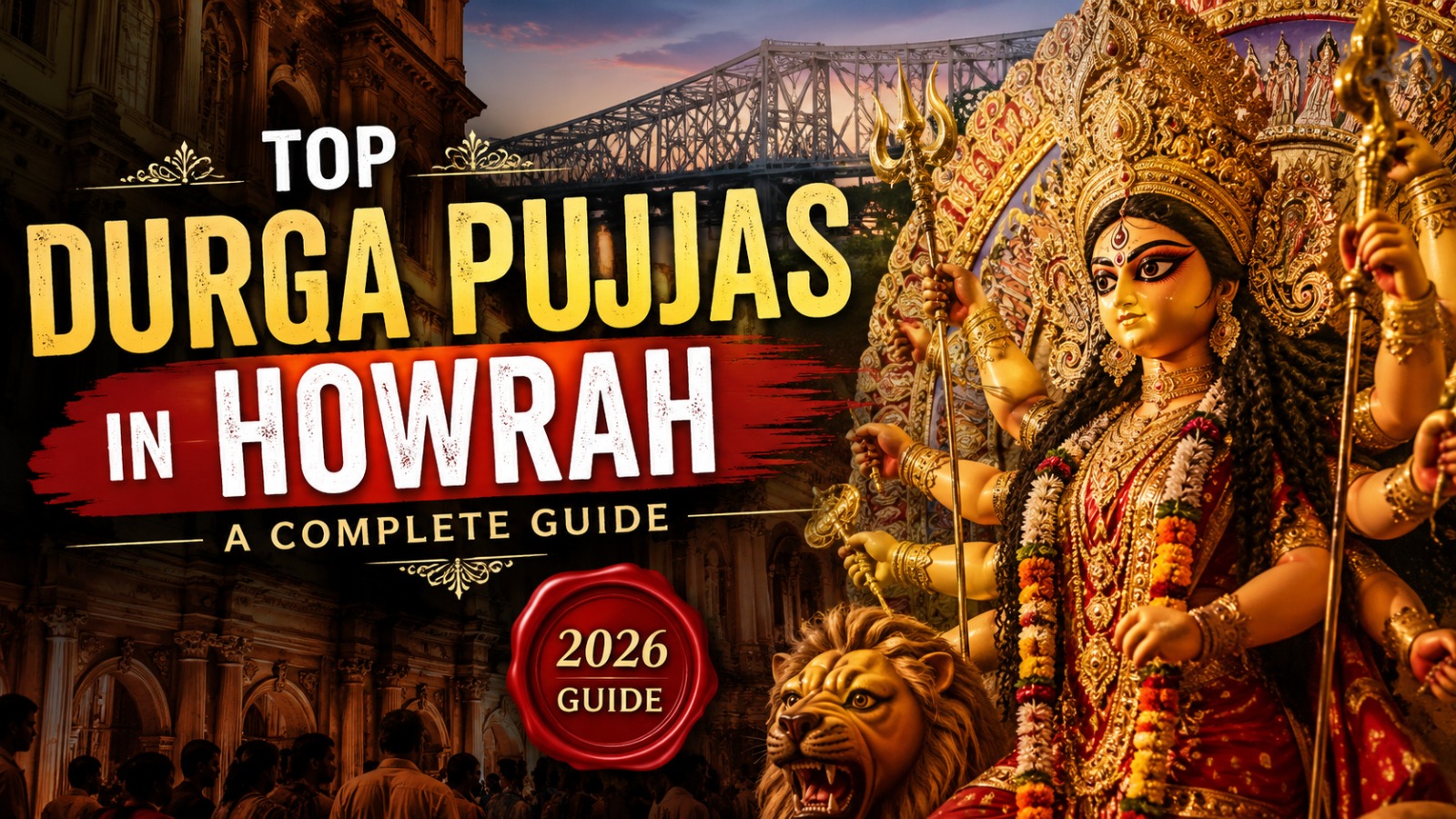
Kolkata gets the headlines every October, but cross the Howrah Bridge and you’ll find a Durga Puja tradition every bit as old, as devoted, and as visually stunning. Howrah is home to century-old bonedi bari rituals, fiercely loved barowari community pujas, and a new generation of clubs pushing pandal art in bold new directions. This guide walks through the top Durga Pujas in Howrah, organized by heritage, community spirit, and creative ambition, so you can build a puja parikrama that goes far beyond the usual Kolkata circuit.
Key Takeaways
- Howrah’s puja map spans three distinct traditions: centuries-old bonedi bari (aristocratic household) pujas, long-running barowari (community) pujas, and modern theme-driven club pujas.
- Salkia and Shibpur are the two neighborhoods with the deepest concentration of heritage pujas, making them the natural starting point for any Howrah pandal trail.
- Some of Howrah’s most-loved pujas, like Salkia Durgotsav Barowari, have been running for well over a century and still hold to traditional sabeki-style idols and rituals.
- Newer clubs such as Howrah Saraswati Club have built a reputation for socially conscious, contemporary themes that rival Kolkata’s biggest pandals.
- The best way to experience Howrah’s Durga Puja is on foot, moving between Salkia, Shibpur, Bantra, and Santragachi rather than trying to cover the whole district by car.
Why Howrah Deserves a Place on Your Puja Trail
Howrah sits just across the river from central Kolkata, but its Durga Puja identity is distinctly its own. This is the district of the Howrah Bridge, the historic railway station, and generations of zamindar and merchant families who built some of Bengal’s oldest Puja traditions inside their own homes. Alongside these bonedi bari pujas, dense neighborhoods like Salkia, Shibpur, and Bantra host barowari community pujas that have run continuously for a hundred years or more, plus a younger wave of clubs experimenting with sculpture, lighting, and social themes. Together, they make Howrah one of the most rewarding — and least crowded — places to experience authentic Durga Puja outside the main Kolkata pandal circuit.
Heritage and Bonedi Bari Pujas in Howrah
Howrah’s oldest Puja tradition lives inside the homes of its aristocratic families. These bonedi bari pujas, concentrated in Shibpur, Salkia, Andul, and Panchla, are private household worship that the public is welcomed to witness — intimate, ritual-heavy, and largely untouched by pandal spectacle.
Shibpur, Andul, Salkia and Panchla Family Pujas
Several old zamindar households in these four neighborhoods have kept their family Durga Puja running for generations, even as the zamindari system that once funded them ended after independence. Many of these homes maintain distinctive rituals — some replace animal sacrifice with sugarcane and pumpkin, and several still carry the idol to immersion on bamboo poles rather than by vehicle, exactly as their ancestors did. Visiting one of these houses, easily reached from Howrah’s Salkia and Shibpur lanes, is the closest thing to stepping into a 19th-century Puja.
Salkia Sadharan Durga Puja (Jatadhari Park)
A heritage household puja centered around Jatadhari Park, this Puja continues to perform its rituals with the same devotion and traditional style that has defined it for generations, making it a strong stop for anyone chasing Howrah’s older, less commercial side of the festival.
Community Barowari Pujas That Define Howrah’s Festive Spirit
Barowari pujas — organized by neighborhood committees rather than single families — are where Howrah’s festival energy is loudest. These pujas anchor entire localities and are usually the first stop for any local pandal-hopping route.
Salkia Durgotsav Barowari
Among the most storied names on this list, Salkia Durgotsav Barowari has been running for well over 147 years and is known for its traditional sabeki-style idol of Durga rather than elaborate theme decor. For visitors who want to see Durga Puja the way it has looked in Howrah for a century and a half, this is essential viewing.
Pally Mangal Club, Salkia
One of the most visited pandals in the Salkia belt, Pally Mangal Club draws large crowds through a combination of striking artwork and elaborate lighting design, making it a natural pairing with a visit to the older Salkia Durgotsav Barowari nearby.
Santragachi Sporting Club (Santragachi Sarbojonin Durgotsav)
What began as a modest thatched-canopy Puja has, over nearly a century, grown into a full concrete pandal — a visible marker of the neighborhood’s growing pride in its own celebration. The Puja is a good example of how Howrah’s community pujas evolve organically with the locality around them.
Kamardanga Sitalatala Barowari Puja
A traditional, community-rooted Puja that trades pandal spectacle for grassroots warmth. It’s less glamorous than Howrah’s bigger names, but it offers a genuine sense of how ordinary Howrah neighborhoods celebrate the festival together.
Bantra Nabin Sangha
A well-known fixture of the Bantra and Kadamtala area, Bantra Nabin Sangha is a regular stop for locals doing a Howrah-side puja round, sitting comfortably alongside the area’s other established barowari pujas.
Themed and Modern Club Pujas Worth Visiting
Alongside its older traditions, Howrah now has a growing set of clubs known for contemporary, socially aware pandal art — proof that the district’s creative ambitions match anything found on the Kolkata side of the river.
Howrah Saraswati Club
Howrah Saraswati Club has built its reputation on creative, current-affairs-driven themes that turn the pandal into a cultural statement rather than just a religious space. One recent edition explored the role of newspapers in everyday life, building the entire structure from newspaper sticks and 3D cutouts, alongside an environmental initiative that distributes saplings to children as part of the celebration.
Shibpur Bati Sangha
Known for blending traditional Puja elements with modern artistic display, Shibpur Bati Sangha has become one of the go-to pandals for visitors who want contemporary design without leaving Shibpur’s heritage-heavy neighborhood.
Shibpur Shrirampur Sarbojanin
A Puja recognized for holding on to Howrah’s cultural heritage through classic, restrained decoration, offering a counterpoint to the district’s more experimental theme pandals.
Planning Your Howrah Puja Trail
Howrah rewards a walking-and-short-hop approach far more than a single long car route. A practical trail starts in Salkia — pairing the heritage Salkia Durgotsav Barowari with the crowd-favorite Pally Mangal Club — before moving toward Shibpur to take in both a bonedi bari household puja and a modern club like Shibpur Bati Sangha. From there, Bantra and Kadamtala lead naturally into Santragachi, closing the loop with the community pride on display at Santragachi Sporting Club. Visiting in the early evening, ahead of the peak Panchami-to-Ashtami crowds, gives the best balance of light for photography and manageable footfall on Howrah’s narrower lanes.