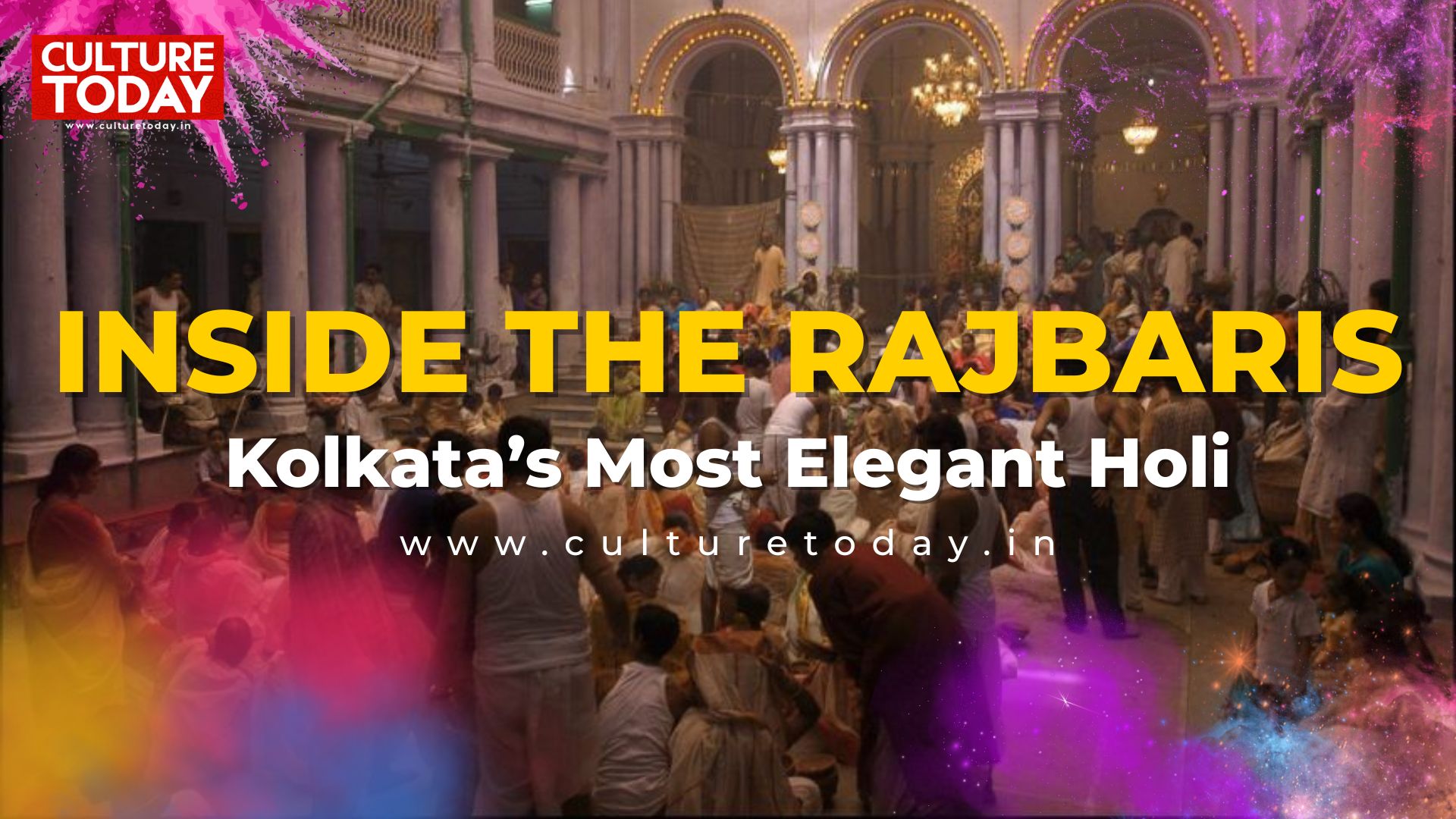
Inside the Rajbaris: A Visual Journey Through Holi in North Kolkata’s Ancestral Homes
In North Kolkata, Holi does not begin with loud music or water balloons.
It begins with silence.
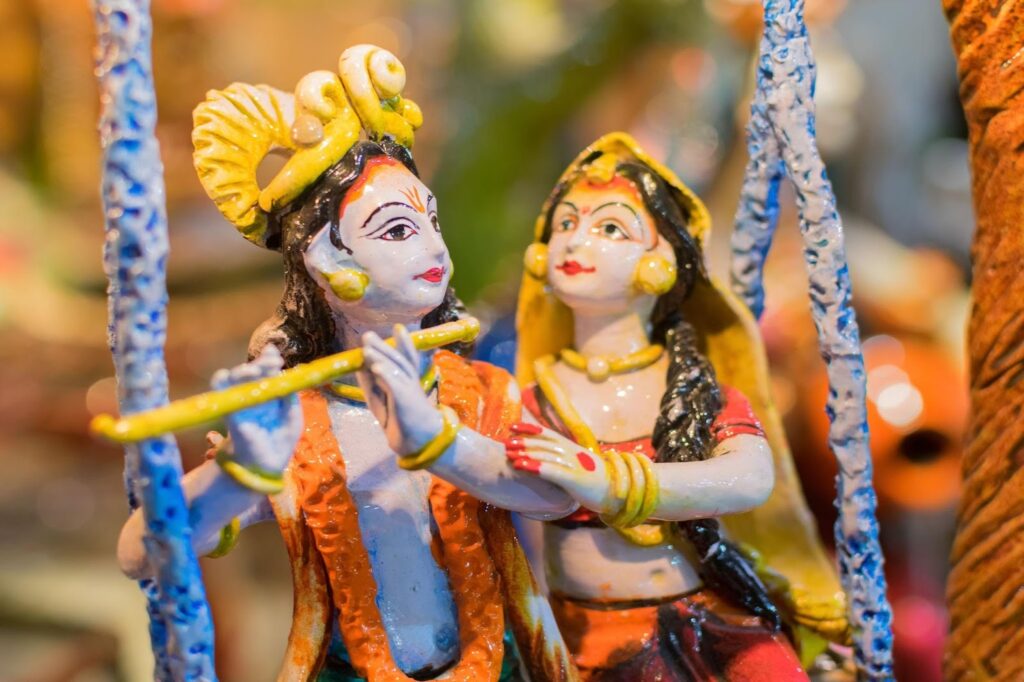
Morning light filters through stained-glass windows. Marble floors glow softly. In the heart of a centuries-old courtyard – the thakur dalan – a small idol of Radha and Krishna waits beneath marigold garlands.
This is Dol in a Bonedi Bari.
Not just a festival.
A living inheritance.
Where Spring Enters Through the Courtyard
In Kolkata, Holi carries a different name – Dol Jatra or Dol Utsav. While much of India celebrates with exuberant colour play, Bengal’s aristocratic homes – the Rajbaris of North Kolkata – welcome spring with devotion, music, and restrained elegance.
The word Bonedi itself suggests lineage – families whose homes have witnessed colonial transitions, cultural renaissance, literary debates, and political awakenings. These houses are not simply buildings. They are archives.
And during Dol, they come alive.
The Architecture of Celebration
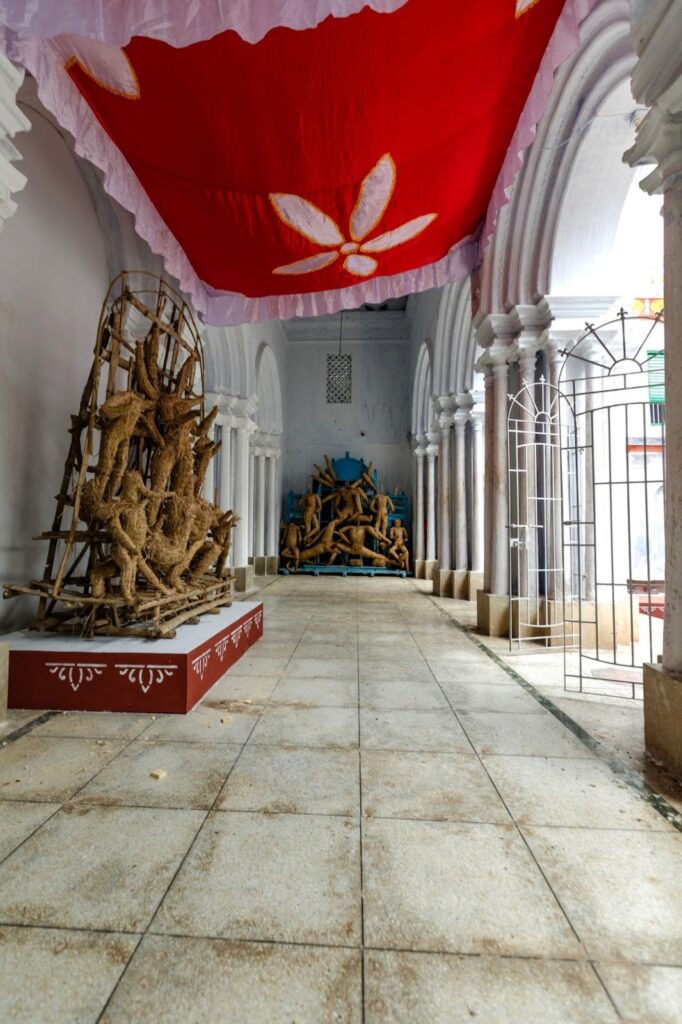
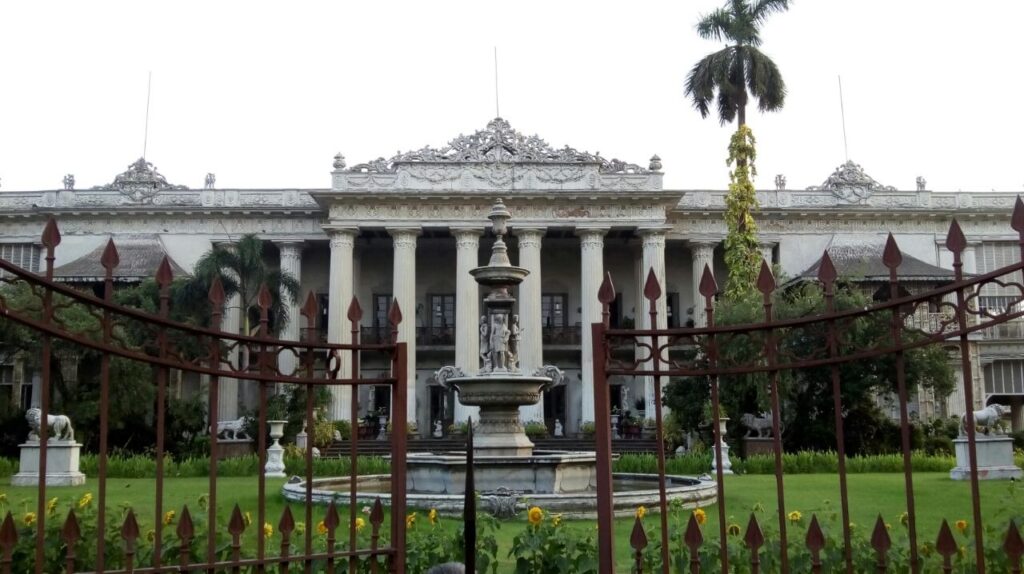
Step into one of these Rajbaris and you’ll notice how architecture shapes ritual.
The thakur dalan – a columned courtyard space designed for family worship – becomes the epicentre of the celebration. Unlike public pandals, this is intimate. Personal. Generational.
The marble floors are swept at dawn. Alpana motifs bloom across the ground in rice paste. Silver plates are arranged with fragrant abir – soft pinks, basanti yellows, gentle greens.
There are no water guns here. No chaos.
Instead, there is choreography.
Elders apply a light smear of colour to the deity first – Radha and Krishna placed gently on a decorated swing, symbolic of the season’s rhythm. Only after offering colour to divinity do family members greet one another.
A touch of abir on the forehead.
A respectful pranam.
A quiet “Shubho Dol.”
Kirtan Over Chaos
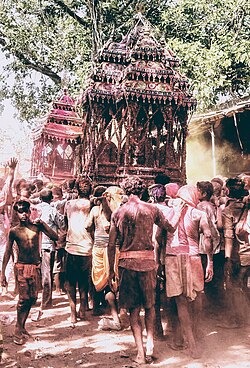
As the morning progresses, music replaces silence.
Traditional kirtans fill the courtyard – devotional songs rooted in Vaishnav philosophy. The rhythmic beat of the mridanga, the metallic pulse of kartal, and collective voices create a spiritual atmosphere that feels almost suspended in time.
Dol in these homes is deeply influenced by Gaudiya Vaishnav traditions. It commemorates the divine love of Radha and Krishna – not merely through colour, but through song, surrender, and shared memory.
Some Rajbaris still invite classical vocalists. Others rely on family members who have inherited these compositions across generations. The songs are not performed for spectacle. They are offered.
And for a moment, you feel it – that rare stillness where heritage breathes.
The Women Who Carry the Colours
Long before guests arrive, the women of the house prepare.
White sarees with red borders are ironed and laid out. Silver bowls are polished. Sweets – malpua, narus, payesh – are arranged with care. Fragrant sandalwood paste is mixed by hand.
In many Bonedi homes, women are custodians of ritual continuity. They remember the songs. They recall which ancestor introduced which tradition. They know which part of the courtyard receives the first sunlight.
Dol becomes an intergenerational exchange – grandmothers teaching granddaughters how lightly colour should be applied, how blessings must precede laughter.
It is grace, not exuberance, that defines the day.
A Festival That Feels Like a Painting
Unlike the cinematic Holi scenes we often see, Dol in North Kolkata’s Rajbaris resembles a watercolor – subtle, layered, contemplative.
There is colour, yes. But it rests gently on cheeks and cotton fabric. The white of attire allows the hues to bloom artistically, almost like moving canvases against the backdrop of Corinthian pillars and fading frescoes.
By afternoon, sunlight shifts. The marble floors hold faint traces of pink and yellow – like memories reluctant to fade.
Then and Now: Changing Times, Unchanged Rituals
Many of these Rajbaris are over 150 years old. Some families have dispersed across continents. Maintenance costs rise. Younger generations live abroad.
And yet, every year, during Dol, doors open.
Even if the gathering is smaller now.
Even if the courtyard echoes differently.
The rituals continue.
In a rapidly modernizing Kolkata – where high-rises replace heritage homes – these celebrations act as anchors. They remind us that festivals were once as much about community and contemplation as they were about celebration.
Why This Matters
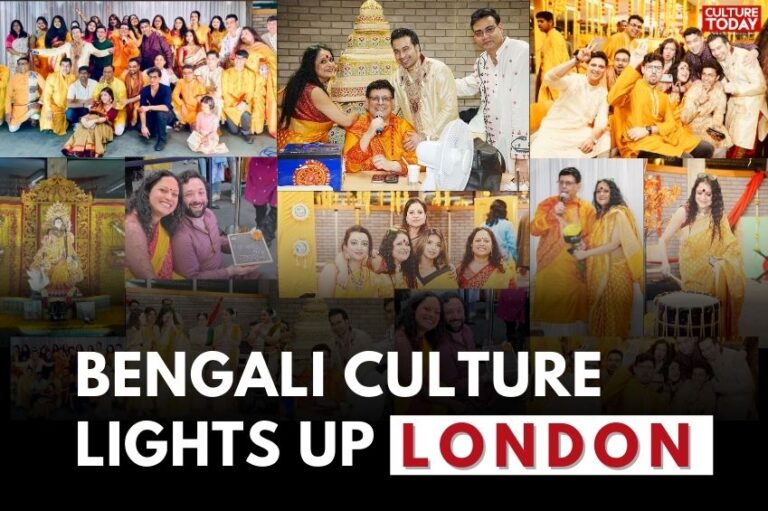
For the Bengali diaspora, these Rajbaris represent more than nostalgia. They symbolize rootedness.
For cultural enthusiasts, they offer insight into how Bengal shaped its own version of Holi – refined, devotional, aesthetically distinct.
For younger generations, they whisper an important truth:
Heritage is not preserved in museums alone.
It survives in courtyards.
In songs.
In the gentle touch of abir placed with intention.
A Walk Through North Kolkata During Dol
If you ever find yourself wandering through the narrow lanes of Shobhabazar, Pathuriaghata, or Jorasanko during Dol morning, pause near an old mansion.
Listen carefully.
You might hear kirtan floating out through wooden shutters.
You might glimpse a courtyard glowing in basanti light.
You might witness a family keeping centuries alive – quietly.
And that is where Bengal’s Holi truly resides.
Not in spectacle.
But in soul.
Meta Description (SEO)
Experience Holi in Kolkata’s Bonedi Baris through a cultural and storytelling lens. Discover how North Kolkata’s ancestral Rajbaris celebrate Dol Jatra with devotion, music, and timeless elegance.